Designing a house in the Northern Rivers is rarely a straightforward, “draw a floor plan and build it” process. It’s a layered journey shaped by landscape, climate, regulations, and careful coordination of multiple moving parts. If you approach it properly from the start, you end up with a home that not only looks good—but works with the land, meets council requirements, and avoids costly delays down the track.
Designing a house starts with the site
The Northern Rivers is one of the most diverse regions in NSW when it comes to land conditions. From steep hinterland blocks around Nimbin and Mullumbimby, to flood-prone land in Lismore, to bushfire-affected rural sites—every project begins with understanding site constraints.
Before any real design work begins, you need a clear picture of:
- Slope and levels
- Vegetation and existing features
- Flood or bushfire risk
- Access and services
This is where detailed contour surveys come in. A proper survey gives you accurate levels, boundaries, and physical features of the land. Without it, you’re effectively guessing—and that’s where expensive redesigns happen later.
Designing a house around constraints, not against them
A common mistake is trying to force a design onto a site. In the Northern Rivers, that approach rarely works.
Instead, good design responds to:
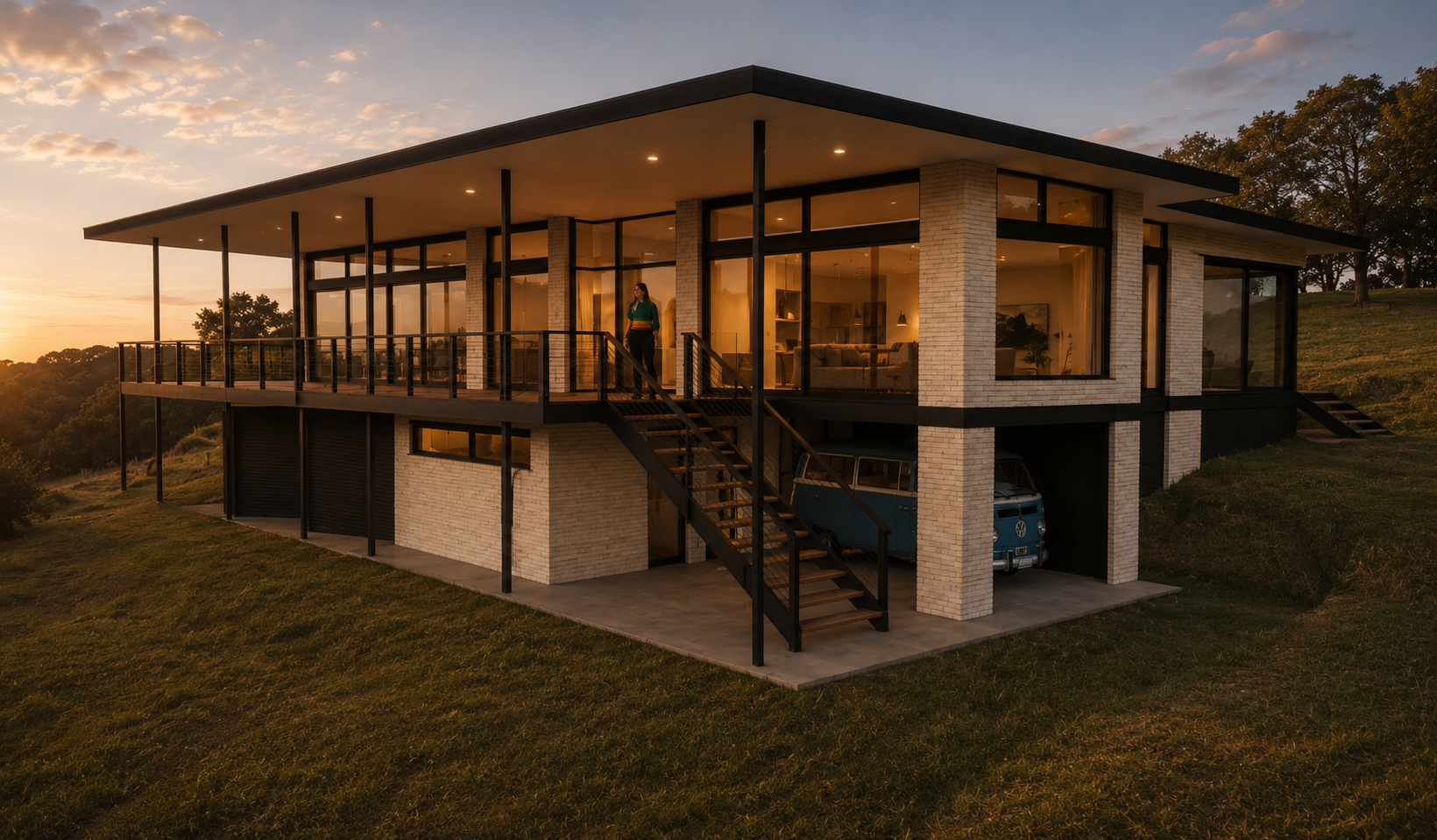
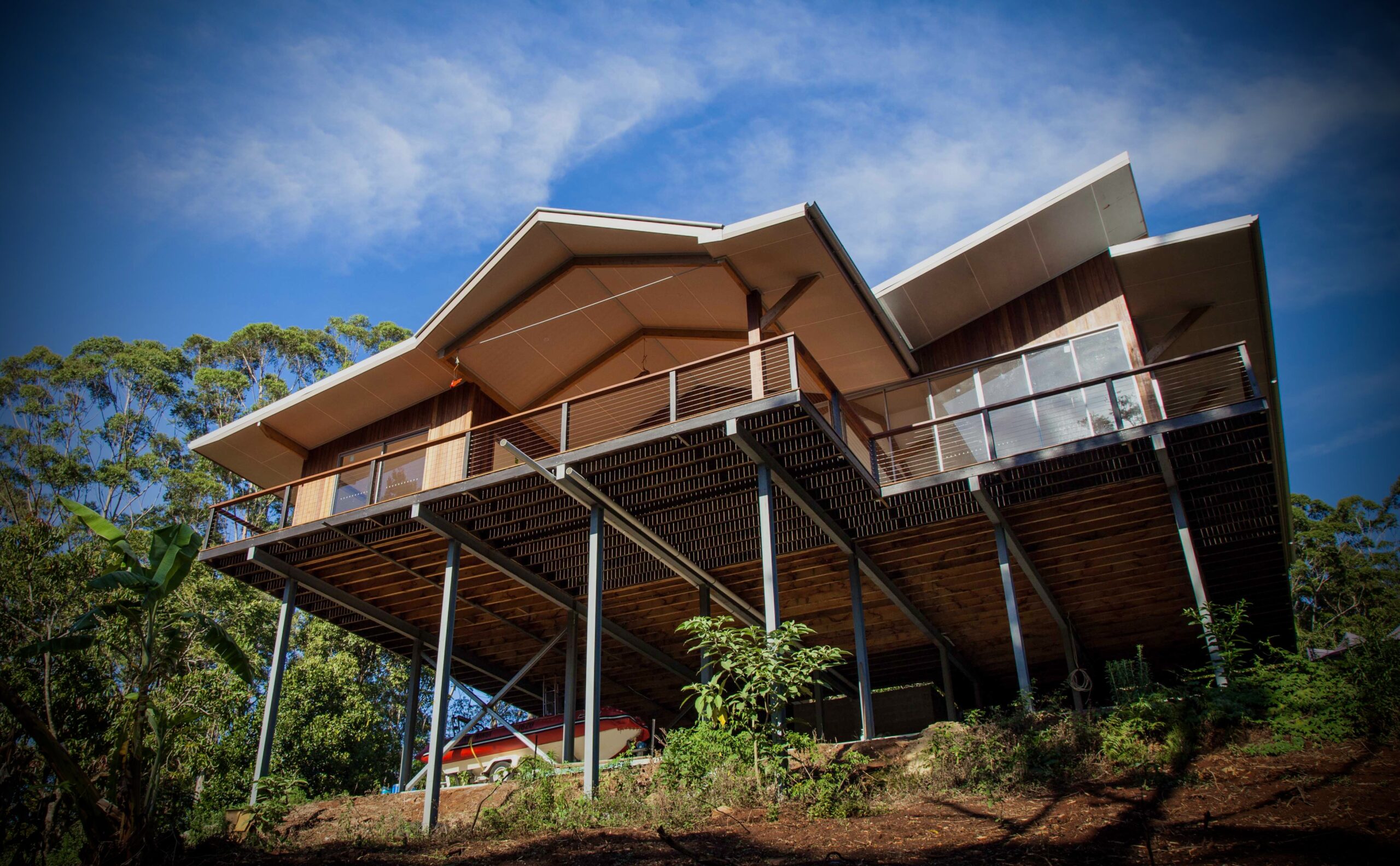
- Natural fall of the land (minimising excessive earthworks)
- Solar orientation for energy efficiency
- Prevailing winds and weather patterns
- Required boundary offsets under local development control plans (DCPs)
For example, pushing a house too close to a boundary might look good on paper, but can trigger council pushback or require justification through planning reports.
Planning controls and approvals
Every project in NSW needs to navigate a planning framework. When designing a house, this typically involves:
- Local Environmental Plans (LEPs)
- Development Control Plans (DCPs)
- Zoning restrictions
- Minimum setbacks and building envelopes
To support your application, a statement of environmental effects (SEE) is prepared. This document explains how your design responds to planning controls and why it’s suitable for the site.
In more complex situations, town planning input is critical—particularly for rural zoning, dual occupancies, or sites with overlays like bushfire or biodiversity.
Bushfire, water, and environmental considerations
Many Northern Rivers properties are affected by bushfire zoning. This means a bush fire assessment is often required.
This assessment determines:
- Bushfire Attack Level (BAL)
- Construction requirements
- Asset protection zones
Ignoring this early can result in major redesigns or increased construction costs.
Water management is another key factor. Properties not connected to sewer will require a grey water design and on-site wastewater solution. This must align with council requirements and often ties into a Section 68 approval.
Energy efficiency and sustainability
Modern homes must meet strict energy performance requirements. When designing a house, this includes:
- BASIX certificates (mandatory in NSW)
- NatHERS certificates (thermal performance ratings)
These influence:
- Window sizes and placement
- Insulation levels
- Building materials
- Orientation and shading
Good design integrates these from the beginning, rather than treating them as a compliance exercise at the end.
Engineering and construction considerations
Once the concept is established, technical input becomes critical.
Structural engineering ensures the building is safe and buildable, particularly on sloping or reactive soil sites. This includes:
- Footings and slab design
- Framing systems
- Bracing and tie-downs (especially in bushfire or high-wind areas)
On sloping blocks, careful planning of earthworks can significantly reduce costs. Over-excavation or poorly planned cut-and-fill can blow out budgets quickly.
Connecting all the pieces
The biggest value in designing a house in the Northern Rivers comes from coordinating all these elements early:
- Surveys
- Bush fire assessments
- Grey water design
- Planning reports
- BASIX and NatHERS
- Structural engineering
Handled properly, these don’t become roadblocks—they become part of a streamlined process from concept to approval.
Final thoughts
Designing a house in the Northern Rivers is about more than just creating a beautiful home. It’s about understanding the land, working within planning controls, and coordinating the right information at the right time.
When done well, the result is a home that:
- Sits naturally on the site
- Meets all regulatory requirements
- Performs efficiently
- Avoids unnecessary delays and redesigns
If you’re starting the process, the key is simple: get the right information early, and design with the site—not against it.