Designing a house in the Northern Rivers requires far more than choosing a floor plan and selecting finishes. From bush fire assessments and detailed contour surveys to BASIX Certificates, structural engineering and council approvals, every project involves a range of factors that influence the final outcome. This guide explains everything homeowners need to know about building design, drafting, architectural design and the approval process throughout the Northern Rivers region.
Whether you’re planning a new home in Lismore, Ballina, Byron Bay, Alstonville, Brunswick Heads, Mullumbimby, Murwillumbah, Nimbin, Kyogle, Casino, Tweed Heads, Evans Head or Iluka, understanding the design and approval process from the beginning can save significant time, money and frustration.
Successful projects involve much more than preparing plans. They require careful coordination of site constraints, planning controls, specialist reports, engineering requirements and approval pathways. By understanding these elements early, homeowners can make informed decisions, reduce risk and create homes that respond to both the site and the lifestyle of the people who will live there.
Table of Contents
- Why Designing a House in the Northern Rivers is Different
- Building Designer, Draftsman or Architectural Design – What’s the Difference?
- Understanding the Site Before Designing a House
- Designing for Lifestyle, Budget and Future Needs
- Site Constraints and Their Impact on Design
- Detailed Contour Surveys
- Designing for Sloping Sites
- Earthworks and Site Preparation
- Bush Fire Assessments and BAL Ratings
- Flood Considerations
- Access, Services and Existing Vegetation
- Boundary Offsets and Building Envelopes
- Understanding the Planning Framework
- Town Planning Considerations
- Development Control Plans (DCPs)
- Statement of Environmental Effects (SEE)
- Development Applications (DA)
- BASIX Certificates
- NatHERS Certificates
- Grey Water Design and Wastewater Management
- Additional Reports and Specialist Assessments
- Structural Engineering
- DA Plans vs Construction Plans
- Construction Certificates
- Coordinating Reports and Approvals
- From Concept Design to Construction
- Why Local Knowledge Matters
- Choosing the Right Building Designer in the Northern Rivers
- Common Mistakes People Make When Designing a House
- Frequently Asked Questions
- Final Thoughts
Why Designing a House in the Northern Rivers is Different
Designing a house in the Northern Rivers is unlike designing a house in many suburban areas of Australia. The region contains an enormous variety of landscapes, planning controls and environmental conditions that can influence the design and approval process.
Within a relatively small geographic area, you may encounter:
- Steep hinterland properties
- Flood-affected land
- Coastal allotments
- Bushfire-prone acreage
- Environmentally sensitive sites
- Rural residential properties
- Suburban infill lots
A design that works perfectly on a flat suburban block in Ballina may be completely unsuitable for a steep site in Nimbin or a bushfire-prone property near Kyogle. Likewise, a home designed for a coastal location in Byron Bay or Evans Head may require significant changes when applied to a rural property in Mullumbimby or Murwillumbah.
Throughout the Northern Rivers, successful building design and drafting starts with understanding the site and responding appropriately to its opportunities and constraints.
The most successful homes are rarely those that force a standard design onto the land. Instead, they are homes that work with the site, climate, views, topography and planning controls from the beginning.
Building Designer, Draftsman or Architectural Design – What’s the Difference?
When homeowners begin researching their project, they often search for a building designer, draftsman, drafting service or architectural design professional.
While these terms are sometimes used interchangeably, they can represent different levels of service and areas of focus.
A draftsman generally focuses on preparing plans and technical documentation.
A building designer often provides a broader service that may include:
- Site analysis
- Concept design
- Building design and drafting
- Design development
- Council approval documentation
- Coordination of specialist reports
- Construction Certificate documentation
Architectural design is often associated with a design-led approach that places strong emphasis on aesthetics, functionality, environmental performance and site responsiveness.
Regardless of terminology, the most important factor is selecting someone who understands local planning requirements, site constraints and approval pathways throughout the Northern Rivers.
A successful project requires much more than producing plans. It requires balancing lifestyle requirements, budget considerations, planning controls, engineering requirements and construction practicalities.
Understanding the Site Before Designing a House
One of the most common mistakes homeowners make is becoming attached to a floor plan before understanding the site.
The site should help shape the design.
Before commencing detailed building design and drafting, it is important to understand:
- Site dimensions
- Property boundaries
- Slope and topography
- Solar orientation
- Prevailing breezes
- Existing vegetation
- Bushfire constraints
- Flood planning controls
- Access requirements
- Existing services
- Planning controls
Every site contains both opportunities and constraints.
A sloping site may provide opportunities for elevated views and split-level living. A north-facing site may allow for excellent passive solar design. Existing vegetation may provide privacy, shade and visual character.
Good architectural design begins with understanding these factors and allowing them to influence the design from the outset.
Designing for Lifestyle, Budget and Future Needs
While understanding the site is critical, a successful home must also respond to the needs of the people who will live there.
Good design balances:
- Lifestyle requirements
- Family needs
- Site conditions
- Budget considerations
- Planning controls
- Future flexibility
Early design discussions often focus on questions such as:
- How many bedrooms are required?
- Is a home office needed?
- Are there plans for a growing family?
- Is ageing in place important?
- Is a secondary dwelling planned in the future?
- How much outdoor living space is desired?
- What construction budget is available?
Answering these questions helps establish priorities and guides the design process.
It is often easier and more cost-effective to accommodate future needs during the design stage than to undertake major alterations later.
Investing time in the design phase often delivers significant savings during construction. Changes made on paper are usually far less expensive than changes made on site. To learn more, read our article on Why Getting Your Home Design Right Before Building Saves You Tens of Thousands.
Site Constraints and Their Impact on Design
Every property presents a unique set of opportunities and limitations.
Common site constraints throughout the Northern Rivers include:
- Steep slopes
- Bushfire-prone land
- Flood planning controls
- Environmental overlays
- Existing vegetation
- Difficult access
- Wastewater limitations
- Easements
- Boundary setbacks
- Stormwater management requirements
These constraints are commonly encountered throughout Lismore, Mullumbimby, Murwillumbah, Nimbin, Kyogle, Ballina and surrounding areas.
While site constraints may initially appear restrictive, they often provide valuable information that helps guide the design process.
The key is identifying them early and developing solutions that work with the site rather than against it.
Detailed Contour Surveys – The Foundation of Good Design
One of the first and most important steps when designing a house is obtaining a detailed contour survey.
A contour survey provides accurate information regarding:
- Property boundaries
- Existing levels
- Site contours
- Easements
- Existing buildings
- Trees and vegetation
- Driveways
- Utility services
This information forms the foundation of the design process.
Without accurate survey information, decisions are often based on assumptions rather than facts.
A detailed contour survey becomes particularly important on sloping sites where floor levels, retaining walls, drainage and earthworks can significantly influence the overall construction budget.
In many cases, a relatively small change in building location can result in substantial savings in earthworks and retaining wall costs.
Designing for Sloping Sites
The Northern Rivers contains many steep and undulating sites, particularly throughout hinterland areas such as Nimbin, Mullumbimby, Murwillumbah and Kyogle.
While sloping sites can present challenges, they also create opportunities for unique and highly functional homes.
Rather than attempting to flatten the site completely, successful building design often works with the natural topography.
This may involve:
- Split-level floor plans
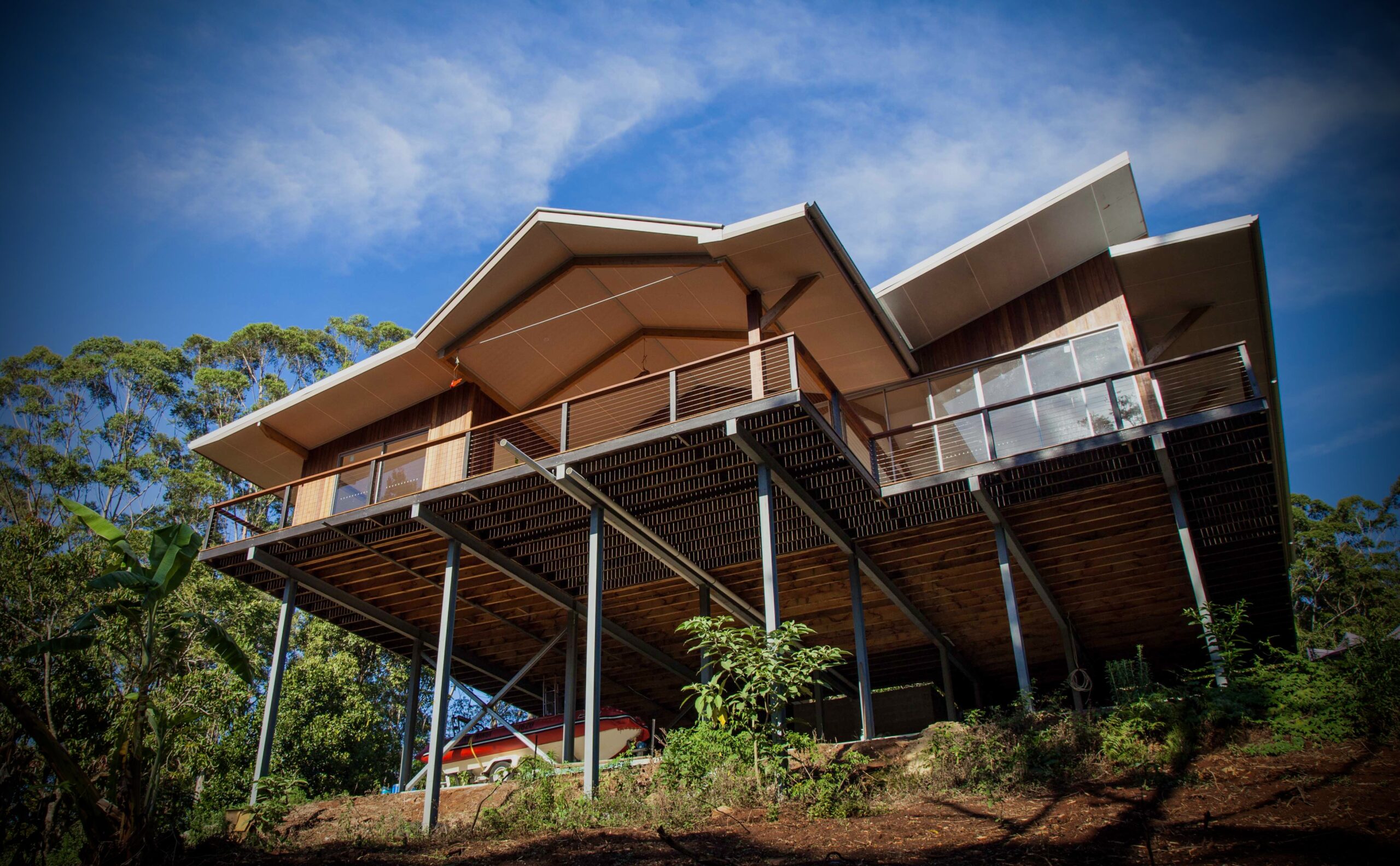
- Suspended floor systems
- Elevated construction
- Stepped layouts
- Reduced excavation
Designing with the land often produces:
- Lower earthworks costs
- Reduced retaining walls
- Better drainage outcomes
- Improved views
- More interesting internal spaces
Good architectural design seeks to integrate the building into the landscape rather than forcing the landscape to accommodate the building.
Earthworks and Site Preparation
Earthworks are frequently one of the most underestimated aspects of residential construction.
Many homeowners focus on the cost of the house itself while overlooking the costs associated with preparing the site.
Earthworks may include:
- Cut and fill operations
- Building pads
- Retaining walls
- Driveway construction
- Drainage works
- Service trenches
The amount of earthworks required is often directly influenced by the design.
A large single-level home placed across a steep slope may require extensive excavation and retaining walls. A split-level design may achieve a similar outcome while significantly reducing site preparation costs.
Early collaboration between building design, site planning and structural engineering can help minimise unnecessary earthworks and improve project efficiency.
Bush Fire Assessments and BAL Ratings
Bushfire planning is a major consideration throughout many parts of the Northern Rivers.
Properties located in rural and semi-rural areas are often identified as bushfire-prone land and may require a bush fire assessment as part of the approval process.
A bush fire assessment typically considers:
- Vegetation types
- Separation distances
- Slope under vegetation
- Access arrangements
- Water supply requirements
- Asset Protection Zones (APZ)
The assessment determines a Bushfire Attack Level (BAL).
BAL ratings influence:
- External wall construction
- Roofing systems
- Windows and glazing
- Deck construction
- External materials
Understanding bushfire requirements early allows the design to be developed around them and helps avoid costly redesigns later in the approval process. For a more detailed explanation of BAL ratings, Asset Protection Zones (APZs), bushfire overlays and construction requirements, read our guide to Bush Fire Assessments Explained for Homeowners.
Flood Considerations in the Northern Rivers
Flood planning has become increasingly important throughout parts of the Northern Rivers.
Areas such as Lismore, Ballina and other low-lying locations may be subject to flood planning controls that influence both design and approval requirements.
Flood-related considerations may include:
- Minimum habitable floor levels
- Flood-compatible materials
- Structural requirements
- Access during flood events
- Council planning controls
Flood constraints do not necessarily prevent development, but they often influence building placement, floor levels and construction methods.
Understanding these requirements early can significantly improve project outcomes.
Access, Services and Existing Vegetation
Access and services are important considerations that can influence both design and construction.
Factors commonly assessed include:
- Driveway gradients
- Emergency vehicle access
- Construction access
- Water supply
- Power availability
- Wastewater infrastructure
Existing vegetation may also affect development opportunities.
Depending on the site, additional assessments may be required, including:
- Arborist reports
- Tree removal plans
- Biodiversity assessments
- Vegetation management plans
Understanding these considerations early helps identify suitable building locations and can streamline the approval process.
Boundary Offsets and Building Envelopes
Boundary setbacks are among the most common planning controls affecting residential development.
Setbacks influence:
- Building location
- House size
- Privacy
- Solar access
- Streetscape character
- Future development opportunities
These controls establish the building envelope within which development can occur.
Understanding setback requirements early ensures the design develops within realistic planning parameters and reduces the likelihood of approval issues later.
Understanding the Planning Framework
Once site constraints have been identified, the next step is understanding the planning framework that applies to the property.
Residential development throughout the Northern Rivers is commonly assessed against a combination of:
- Local Environmental Plans (LEPs)
- Development Control Plans (DCPs)
- State Environmental Planning Policies (SEPPs)
- Bushfire planning requirements
- Flood planning controls
- Environmental overlays
The specific requirements vary depending on the location, zoning and characteristics of the site.
Understanding these controls early allows the design process to proceed with a clear understanding of the likely approval pathway.
Town Planning Considerations
Not every residential project requires formal town planning input. However, town planning advice can be particularly valuable for:
- Rural properties
- Secondary dwellings
- Dual occupancies
- Bushfire-constrained sites
- Flood-affected land
- Environmentally sensitive properties
- Non-standard lots
Early planning advice often identifies potential issues before significant resources are invested in detailed documentation.
This allows the building design and drafting process to proceed with a clearer understanding of approval requirements and development opportunities.
Development Control Plans (DCPs)
Development Control Plans (DCPs) play an important role in shaping residential development throughout New South Wales.
While Local Environmental Plans establish the broader planning framework, DCPs provide detailed guidance regarding how development should occur on a site.
Common DCP controls may address:
- Building setbacks
- Boundary offsets
- Building heights
- Site coverage
- Private open space
- Landscaping
- Vehicle access
- Parking requirements
- Privacy considerations
- Solar access
- Streetscape character
Understanding these requirements is an important part of the architectural design process.
A well-prepared design seeks to work within these controls while still responding to the needs of the client and the characteristics of the site.
Designs that align with relevant DCP controls generally experience a smoother assessment process and are less likely to generate requests for additional information.
Statement of Environmental Effects (SEE)
Many Development Applications require a Statement of Environmental Effects (SEE).
This document is an important component of the approval process because it explains the proposed development and demonstrates how it responds to applicable planning controls.
A Statement of Environmental Effects typically addresses:
- Site description
- Proposed development
- Relevant planning controls
- Environmental impacts
- Design rationale
- Compliance considerations
- Relevant legislation
While homeowners often focus on plans and drawings, supporting documentation such as the SEE can be equally important during the assessment process.
A well-prepared Statement of Environmental Effects helps council officers understand the proposal and provides justification for the design approach adopted.
For more complex developments, additional planning reports may also be required.
Development Applications (DA)
Many residential projects throughout the Northern Rivers require a Development Application before construction can commence.
The purpose of the DA process is to allow council to assess the proposal against relevant planning controls and determine whether approval should be granted.
A typical Development Application may include:
- Site plans
- Floor plans
- Elevations
- Roof plans
- BASIX Certificate
- Statement of Environmental Effects
- Supporting reports
- Site-specific assessments
The exact documentation required varies depending on the nature of the project and the characteristics of the site.
Not every project follows the same approval pathway. Depending on the site, zoning and development type, some projects may qualify for Complying Development while others require a Development Application. To better understand the differences, read our guide on DA vs CDC: Which Approval Pathway Is Right for Your Project?
A simple suburban dwelling may require fewer supporting documents than a rural property affected by bushfire constraints, wastewater requirements, flood controls or environmental overlays.
Identifying approval requirements early helps reduce delays and allows the project to move forward more efficiently.
BASIX Certificates Explained
Every new home in New South Wales requires a BASIX Certificate.
BASIX (Building Sustainability Index) is designed to improve the environmental performance of residential development.
The BASIX assessment considers:
- Water efficiency
- Energy efficiency
- Thermal comfort
The outcome of the BASIX assessment influences many aspects of the final design, including:
- Window sizes
- Glazing performance
- Insulation levels
- Shading devices
- Rainwater harvesting
- Water-efficient fixtures
Rather than treating BASIX as a compliance exercise at the end of the project, it is generally more effective to consider BASIX requirements during the early stages of design development.
Integrating sustainability measures early often produces better design outcomes and avoids costly changes later.
NatHERS Certificates and Thermal Performance
NatHERS (Nationwide House Energy Rating Scheme) is an important component of modern residential design.
The NatHERS assessment evaluates how efficiently a dwelling will perform throughout the year and influences many aspects of the design.
Factors considered include:
- Orientation
- Insulation
- Glazing
- Ventilation
- Shading
- Building materials
Good architectural design seeks to maximise passive heating and cooling opportunities before relying on mechanical systems.
This can improve comfort, reduce energy consumption and lower long-term running costs.
Throughout the Northern Rivers, where climatic conditions vary significantly between coastal and hinterland locations, thoughtful passive design can have a substantial impact on the performance of a home.
Grey Water Design and Wastewater Management
Many rural properties throughout the Northern Rivers are not connected to a reticulated sewer network.
In these circumstances, wastewater must be managed on-site.
Common systems include:
- Septic systems
- Aerated wastewater treatment systems
- Grey water disposal systems
- Irrigation areas
A wastewater assessment is often required to determine the most appropriate solution for the property.
Factors influencing wastewater design include:
- Soil characteristics
- Site slope
- Available land area
- Existing vegetation
- Watercourses
- Environmental constraints
The location of wastewater infrastructure can significantly influence building placement and site planning.
For this reason, wastewater considerations should ideally be addressed during the early stages of design rather than after the house has already been planned.
Additional Reports and Specialist Assessments
Depending on the site and development proposal, additional reports may be required to support an application.
These can include:
- Bush fire assessments
- Arborist reports
- Tree removal plans
- Biodiversity Development Assessment Reports (BDAR)
- Vegetation management plans
- Flood reports
- Stormwater management plans
- Engineering reports
The exact requirements vary from site to site.
One of the challenges homeowners often face is identifying which reports are required and ensuring they are coordinated efficiently.
Addressing these requirements early helps reduce approval delays and allows the project to progress more smoothly.
Structural Engineering – Turning Design into Reality
Once the design has been developed and planning requirements addressed, structural engineering becomes a critical part of the process.
Structural engineering ensures the home can be safely and efficiently constructed.
Engineering documentation commonly addresses:
- Footings and slabs
- Structural steel
- Timber framing
- Retaining walls
- Bracing systems
- Wind loading requirements
- Tie-down requirements
- Suspended floor systems
Engineering requirements become particularly important on sloping sites, bushfire-prone land, flood-affected properties and rural acreage developments.
Good building design and drafting works hand-in-hand with structural engineering to ensure the final design is both practical and economical to construct.
DA Plans vs Construction Plans
One of the most common misconceptions among homeowners is that once a Development Application has been approved, construction can immediately commence.
In most cases, this is not the case.
Development Application plans are generally prepared to obtain planning approval.
Before building work can begin, additional technical documentation is often required.
This may include:
- Structural engineering
- Construction details
- Stormwater design
- Wastewater approvals
- Energy efficiency compliance
- Technical specifications
Construction documentation contains a significantly higher level of detail than what is typically required for a Development Application.
This is why many projects continue through a second documentation phase after receiving Development Consent.
What is a Construction Certificate?
A Construction Certificate (CC) is typically the next major approval required after obtaining Development Consent.
The Construction Certificate confirms that the proposed building work complies with:
- The National Construction Code
- Australian Standards
- Conditions of Consent
- Relevant legislation
A Construction Certificate must generally be obtained before building work can commence.
Depending on the project, this stage may involve coordinating:
- Architectural plans
- Building design and drafting documentation
- Structural engineering
- BASIX commitments
- Stormwater design
- Wastewater approvals
- Specialist reports
For many homeowners, the Construction Certificate stage can feel more technical and complex than the Development Application process due to the level of detail involved.
Why Construction Certificates Are Often More Complex Than the Development Application
Many homeowners assume that once Development Consent has been issued, the difficult part is over. In reality, the Construction Certificate stage often involves significantly more technical coordination than the Development Application itself.
Before a Construction Certificate can be issued, a range of documentation may need to be prepared, reviewed and coordinated, including:
- Structural engineering
- Stormwater design
- Wastewater approvals
- BASIX commitments
- NatHERS compliance
- Construction specifications
- Energy efficiency requirements
- Supporting specialist reports
- Responses to certifier requests
Depending on the project, additional information may also be required to satisfy conditions of consent imposed during the Development Application process.
One of the most time-consuming aspects of obtaining a Construction Certificate is ensuring that all plans, reports and supporting documentation are consistent and work together as a coordinated package.
For many projects throughout the Northern Rivers, the Construction Certificate stage involves more coordination and project management than the Development Application itself.
Getting a Construction Certificate is often not simply a matter of submitting plans. It commonly requires the coordination of structural engineering, wastewater approvals, stormwater design, BASIX commitments, NatHERS compliance, specialist reports and responses to certifier requests.
Throughout the Northern Rivers, we regularly coordinate the Construction Certificate process on behalf of our clients, helping bring together the required documentation, consultant reports and approval requirements to create a complete package for certification.
Understanding these requirements early can help reduce delays, avoid unnecessary requests for further information and create a smoother transition from approval to construction.
Coordinating Reports and Approvals
One of the most challenging aspects of residential development is coordinating the various reports, approvals and technical documentation required throughout the project.
Depending on the site, this may involve coordinating:
- Detailed contour surveys
- Bush fire assessments
- Town planning advice
- Statements of Environmental Effects
- BASIX Certificates
- NatHERS Certificates
- Grey water design
- Structural engineering
- Stormwater management plans
- Arborist reports
- Biodiversity reports
- Certification requirements
Each component influences the others.
For example:
- A bushfire assessment may affect building location.
- Building location may influence wastewater design.
- Wastewater design may influence earthworks.
- Earthworks may influence engineering requirements.
- Engineering requirements may influence construction costs.
The ability to coordinate these moving parts efficiently often determines whether a project progresses smoothly or becomes unnecessarily complicated.
Coordinating the Entire Process
One of the biggest challenges homeowners face when designing a house is understanding which reports are required, who prepares them and when they are needed.
A typical project may require a detailed contour survey, bush fire assessment, wastewater design, Statement of Environmental Effects, BASIX Certificate, NatHERS Certificate, structural engineering, stormwater design and Construction Certificate documentation.
Each of these components influences the others. A change to the building location may affect wastewater design. Wastewater requirements may influence earthworks. Earthworks may affect engineering requirements. Engineering requirements may influence construction costs.
Throughout the Northern Rivers, we regularly coordinate these requirements from concept design through to Development Application and Construction Certificate approval. By addressing these items early and ensuring all information works together, potential issues can often be identified before they become costly delays.
Having a single point of contact throughout the process can help simplify what is often a complex and confusing journey for homeowners.
One of the key advantages of engaging a building designer early is having someone who can help connect all the pieces. Rather than homeowners trying to determine which reports are required and when they should be obtained, the process can be managed in a logical sequence that supports both the design and approval process.
From Concept Design to Construction
The process of designing a house generally progresses through several stages.
Pre-Design and Feasibility
This stage typically includes:
- Initial consultation
- Site investigations
- Planning research
- Budget discussions
- Constraint identification
Concept Design
This stage focuses on:
- Floor plan development
- Site planning
- Design options
Design Development
This phase involves:
- Refining layouts
- External appearance
- Roof design
- Window and door locations
- 3D modelling
Development Application Documentation
This stage includes:
- Architectural plans
- Supporting reports
- Council lodgement
- Approval coordination
Construction Certificate Documentation
This stage generally involves:
- Engineering coordination
- Technical documentation
- Compliance requirements
- Certification processes
Construction Ready Documentation
The final stage involves preparing the information required for construction and ensuring all relevant approvals have been obtained.
Why Local Knowledge Matters
The Northern Rivers presents unique planning, environmental and construction challenges.
Projects in Lismore may face different constraints to projects in Byron Bay, Ballina, Mullumbimby, Murwillumbah, Nimbin, Kyogle, Casino, Tweed Heads, Evans Head or Iluka.
Local knowledge can help identify potential issues early and provide practical solutions based on real-world experience.
This understanding of local conditions, planning controls and approval pathways often contributes to smoother project outcomes and fewer surprises during the approval process.
Choosing the Right Building Designer in the Northern Rivers
Selecting the right building designer is one of the most important decisions you’ll make when planning a new home, renovation or secondary dwelling.
While many homeowners initially search for a draftsman, architectural design service or building designer based primarily on price, experience and local knowledge often provide significantly greater value throughout the life of a project.
A good building designer should do much more than prepare plans.
They should help:
- Identify site constraints
- Develop practical design solutions
- Coordinate required reports
- Navigate council requirements
- Prepare approval documentation
- Guide the project from concept through to approval
Throughout the Northern Rivers, successful building design and drafting often requires coordination of detailed contour surveys, bush fire assessments, BASIX Certificates, NatHERS Certificates, structural engineering, wastewater design and Construction Certificate documentation.
The benefit of working with an experienced local building designer is having someone who understands how all these elements connect and can help streamline the process from the first sketch through to a construction-ready project.
Common Mistakes People Make When Designing a House
Even well-planned projects can encounter problems if important issues are overlooked early in the process.
Some of the most common mistakes homeowners make include:
Designing Before Obtaining a Survey
A floor plan developed without accurate survey information can result in significant redesign costs later. A detailed contour survey provides the foundation for informed design decisions.
Underestimating Site Constraints
Bushfire constraints, flooding, wastewater requirements and access limitations can all influence the design and approval pathway. Identifying these issues early helps avoid delays and unnecessary redesigns.
Ignoring Earthworks Costs
Many homeowners focus on the cost of the house itself while overlooking the impact of earthworks, retaining walls and site preparation. Designing with the natural contours of the land can often reduce these costs significantly.
Not Considering Wastewater Requirements Early
On rural properties, wastewater design can influence where a house can be located. Leaving these considerations until later can limit design options and create approval complications.
Choosing a Design Before Understanding Planning Controls
Development Control Plans, zoning requirements and environmental constraints can all influence what is achievable on a site. Understanding these controls early helps ensure the design develops within realistic parameters.
Focusing Solely on Floor Area
Larger homes are not always better homes. Good design balances functionality, efficiency, comfort and budget while responding appropriately to the site.
By identifying these issues early, homeowners can make better-informed decisions and create a smoother path through both the design and approval process.
Frequently Asked Questions
How much does it cost to design a house in the Northern Rivers?
The cost varies depending on project size, complexity, site constraints and approval requirements. Factors such as bush fire assessments, wastewater design, engineering and planning requirements can all influence overall costs.
Do I need a detailed contour survey before designing a house?
In most cases, yes. A detailed contour survey provides critical information regarding levels, boundaries, existing structures and site features that influence the design.
What is a bush fire assessment?
A bush fire assessment evaluates the bushfire risk associated with a property and determines the applicable Bushfire Attack Level (BAL) and construction requirements.
What is a BAL rating?
BAL stands for Bushfire Attack Level. The BAL rating influences construction methods, building materials, glazing and external building elements.
What is a Statement of Environmental Effects?
A Statement of Environmental Effects explains the proposal and demonstrates how it responds to relevant planning controls and environmental considerations.
What is the difference between a Development Application and a Construction Certificate?
A Development Application seeks planning approval, while a Construction Certificate confirms compliance with building regulations, engineering requirements and conditions of consent.
What is BASIX?
BASIX is a sustainability assessment that focuses on water efficiency, energy efficiency and thermal comfort for residential development in New South Wales.
What is a NatHERS Certificate?
NatHERS assesses the thermal performance of a dwelling and contributes to the energy efficiency requirements of the project.
Do I need structural engineering?
Yes. Most residential projects require structural engineering for footings, slabs, framing and other structural elements.
What is grey water design?
Grey water design forms part of on-site wastewater management and is commonly required for properties not connected to sewer infrastructure.
Why do sloping sites cost more to build on?
Sloping sites often require additional earthworks, retaining walls, drainage solutions and engineering input, which can increase construction costs.
Why is local experience important?
Local experience provides valuable insight into planning controls, environmental constraints and approval pathways specific to the Northern Rivers.
Final Thoughts
Designing a house in the Northern Rivers is about far more than producing a floor plan.
Successful projects require careful consideration of site constraints, detailed contour surveys, bush fire assessments, town planning requirements, Development Control Plans, BASIX Certificates, NatHERS Certificates, grey water design, structural engineering and approval pathways.
Whether you’re building in Lismore, Ballina, Byron Bay, Alstonville, Brunswick Heads, Mullumbimby, Murwillumbah, Nimbin, Kyogle, Casino, Tweed Heads, Evans Head or Iluka, a thoughtful and coordinated approach can help streamline approvals, reduce risk and create a home that responds to both the site and the lifestyle of its occupants.
Good architectural design, building design and drafting is about more than obtaining approval. It is about creating a home that works with the land, performs efficiently, supports the needs of the people who live there and remains enjoyable for years to come.
Planning a New Home in the Northern Rivers?
Whether you’re planning a new home, renovation, secondary dwelling or rural project, investing time in the early stages of design can make a significant difference to the outcome.
We provide building design, drafting and architectural design services throughout the Northern Rivers, including Lismore, Ballina, Byron Bay, Alstonville, Brunswick Heads, Mullumbimby, Murwillumbah, Nimbin, Kyogle, Casino, Tweed Heads, Evans Head and Iluka.
From concept design and detailed planning through to Development Applications, Construction Certificates and coordination of specialist reports, we help guide projects through the approval process and towards construction.
If you’re considering a project and would like to discuss your site, contact us to explore the possibilities and take the first step towards bringing your ideas to life.