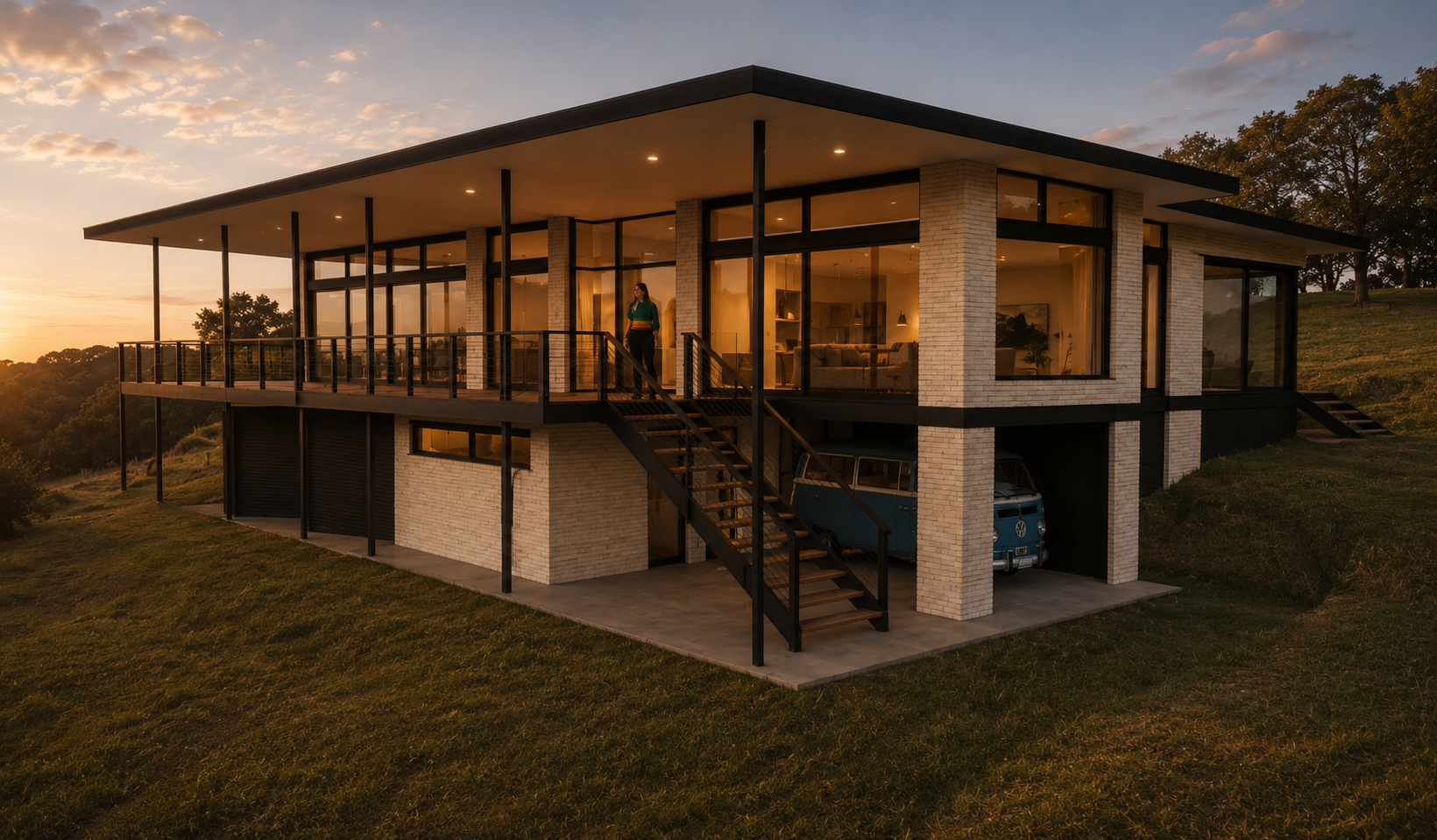
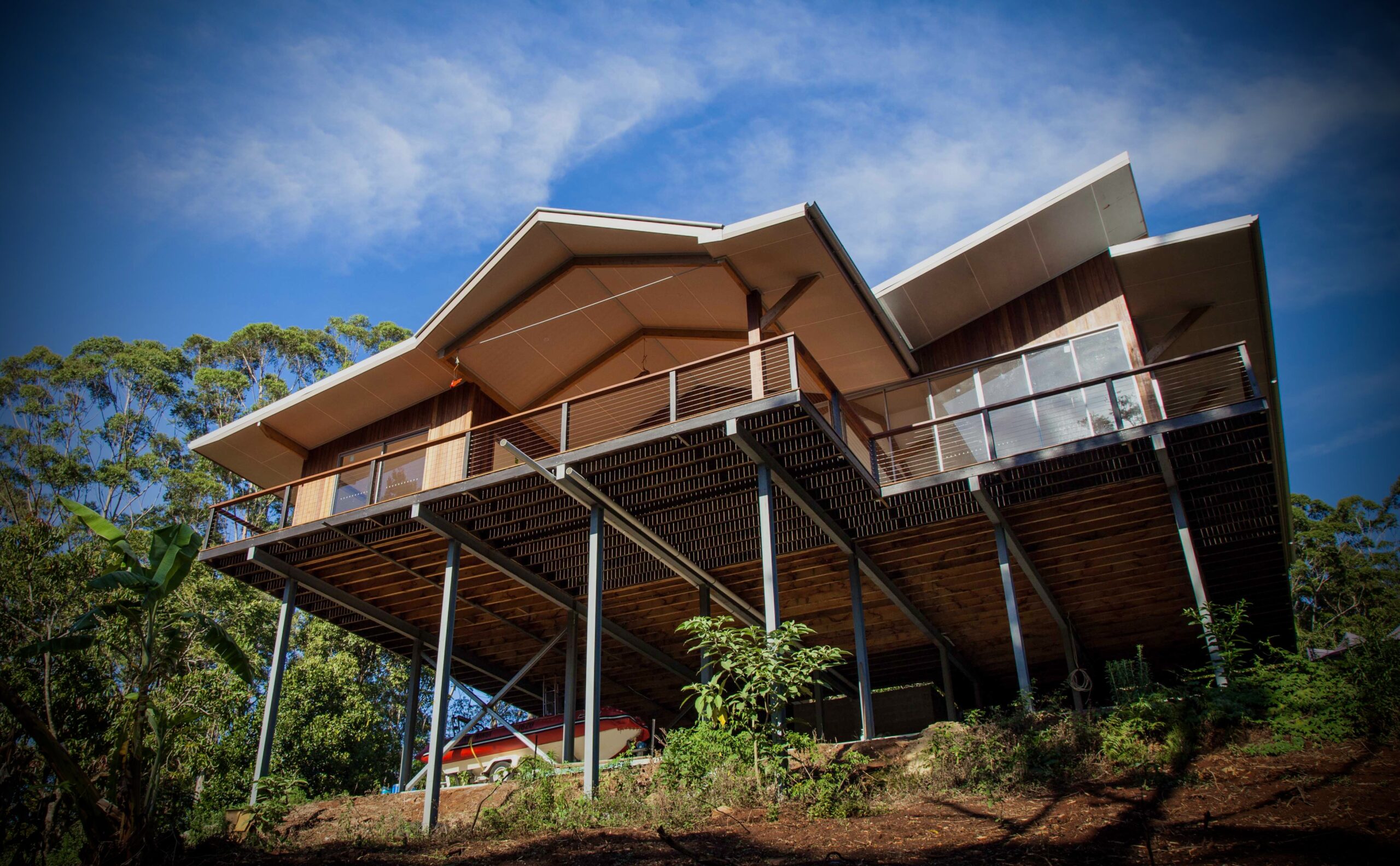
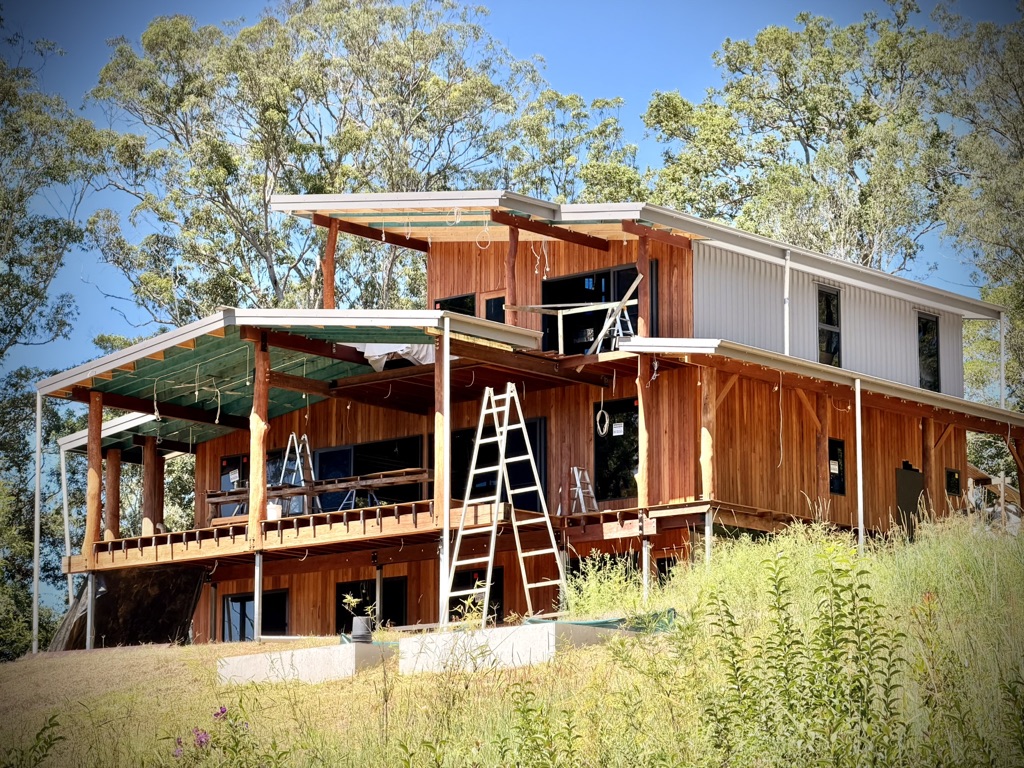
Building a home in the Northern Rivers is unlike almost anywhere else in Australia. Getting your home design right before building is crucial. Between the region’s unique planning overlays, flood constraints, bushfire zones, biodiversity corridors, and council requirements across Lismore, Byron Bay, Ballina, Mullumbimby, Murwillumbah, Casino and Kyogle — there’s a lot that can go wrong before a single slab is poured. And when things go wrong late in the process, they don’t go wrong cheaply.
The single most important investment you can make before breaking ground isn’t your builder, your soil test, or your site survey. It’s your design. Getting it right from the very beginning — with a qualified building designer who understands this region — is where the real money is saved or lost.
Here’s why.
The Cost of Changing Your Mind Gets Exponentially More Expensive as a Project Progresses
There’s a well-known rule in construction: a change made on a napkin costs almost nothing. The same change made during design development costs a few hundred dollars. Made during DA approval? A few thousand. Made during construction? Tens of thousands. Made after the slab is down? You may as well cry.
This isn’t an exaggeration — it’s the lived experience of almost every owner-builder and first-time client who didn’t invest in thorough design development before committing to a direction.
The design process exists precisely to find those problems early, while changes are still cheap. A good building designer will walk you through feasibility, site analysis, and concept development before you’ve locked in anything. That’s not just a “nice to have” — it’s insurance.
The Northern Rivers Has Regulatory Complexity That Most Regions Simply Don’t
If you’re building anywhere from Byron Bay to Casino, Ballina to Murwillumbah, you’re operating in one of the most regulatory complex building environments in NSW. That’s not a criticism of the region — it reflects how genuinely unique and ecologically significant this part of the world is. But it does mean that what works in suburban Sydney or coastal Queensland often simply doesn’t apply here.
Consider just some of what your building designer needs to navigate in the Northern Rivers:
Flood planning overlays affect enormous portions of the Tweed, Richmond and Brunswick river catchments. Lismore, in particular, has undergone significant planning changes post-2022 that affect what can be built where, at what floor level, and with what construction type. Getting this wrong at concept stage can mean your DA is refused outright, or you’re forced into expensive redesigns after lodgement.
Bushfire Attack Levels (BAL) vary dramatically across the region. A site in the Byron Bay hinterland, Mullumbimby or Murwillumbah can carry BAL-12.5 through to BAL-FZ ratings that require entirely different construction specifications, materials, and costs. A building designer who doesn’t assess this early in feasibility is setting you up for a budget blowout when your bushfire consultant’s report comes back requiring flame zone construction methods.
Biodiversity and vegetation management is a major consideration for rural and semi-rural lots throughout the region. If your proposed build disturbs native vegetation or habitat, you may need a Biodiversity Development Assessment Report (BDAR), vegetation management plans, or arborist reports before your DA can even be assessed. These requirements can fundamentally change where your building footprint can go — something that needs to be understood before you fall in love with a particular floor plan.
BASIX requirements under NSW legislation require your building to meet thermal comfort and water efficiency benchmarks. In the Northern Rivers’ subtropical climate, the orientation of your home, window placement, eaves depth, and roof design all interact with your BASIX score. Getting these wrong at design stage means either failing your certificate or expensive retrofitting.
Council-specific requirements across Byron Shire, Tweed Shire, Lismore City, Ballina Shire and Richmond Valley each have their own Local Environmental Plans (LEPs) and Development Control Plans (DCPs) with unique provisions. What’s acceptable in one council area isn’t necessarily acceptable in another, even for sites only a few kilometres apart.
The DA and Construction Certificate Process: Where Projects Stall and Budgets Blow Out
Most homeowners vastly underestimate the complexity of the development approval pathway — and the cost when it isn’t managed well.
Your Development Application (DA) requires a comprehensive set of architectural plans that include your proposed floor plans, elevations, roof plan, BASIX certificate, window schedule, relevant structural sections and notes, a concept stormwater management plan, and supporting construction notes. But beyond the drawings themselves, a DA often requires a suite of specialist consultant reports. Depending on your site and project, this can include:
- A Statement of Environmental Effects (SEE) prepared by a town planner
- A bushfire report
- A surveyor’s detailed survey
- An arborist report
- A biodiversity development assessment report
- A greywater design
- Vegetation management plans
Coordinating all of these independently — sourcing consultants, briefing them on your project, chasing documents, ensuring their reports align with your design and each other — is a significant undertaking. When it isn’t managed properly, consultants work in silos, reports contradict the drawings, and your DA ends up in a back-and-forth with the council that can add months and thousands to your project.
This is exactly why experienced project management of the consultant team is so valuable. Having a building designer who not only prepares your drawings but coordinates, briefs, and reviews every consultant report — ensuring everything is consistent and complete before lodgement — dramatically reduces delays, resubmissions, and associated costs.
The same principle applies to your Construction Certificate (CC). Once your DA is approved, you still need a CC before construction can begin. The CC process involves preparing and submitting a detailed application on the NSW Planning Portal, coordinating a private certifier, sourcing and engaging structural engineers, managing application forms, reviewing construction certificate plans, and addressing the certifier’s requirements list. This alone is a multi-month coordination exercise that is easily derailed if it isn’t actively managed.
When you’re paying a builder to stand around while your CC is being chased, the cost of poor project management becomes very, very real, very quickly.
What “Getting the Design Right” Actually Means
It doesn’t just mean a pretty 3D render. It means a thorough, sequential process where every decision is made at the right time with the right information.
Feasibility and pre-design is where your building designer assesses your site honestly — reviewing planning constraints, topography, access, orientation, flood and fire risk, and budget against your brief. This is where the hard conversations happen, and where they should happen. Not after you’ve paid for plans.
Concept design and floor plan development is where possibilities are explored. A good building designer isn’t just a draftsperson executing your sketches — they’re bringing spatial knowledge, regulatory understanding, and design thinking to help you find the best outcome for your site and lifestyle. Multiple layouts may be explored. The goal is to find the floor plan that works before you invest in developing it further.
Design development and 3D modelling is where the concept is refined into something buildable. Roofline, window and door locations, sizes, and specifications are developed. The 3D model lets you see your home before it’s built — identifying issues, changing your mind about room relationships, adjusting window sizes for privacy or views. This is the cheapest time to make those changes.
Architectural plans for DA translate the developed design into the formal documentation required for development approval — with all the sheets, certificates, and consultant inputs needed to give your application the best chance of smooth approval.
Construction plans and documentation go further again — producing the technical drawings that your builder will actually build from, and that your certifier will assess for the CC. Earthworks plans, slab plans, subfloor framing, roof framing, erosion and sediment control — this is the documentation that underpins a smooth, accurate build.
Every phase matters. Every phase done well saves money in the phases that follow.
The Consultant Network Advantage
One of the less-talked-about benefits of working with an established local building designer is access to a trusted network of professional consultants who know the region, know the councils, and know how to turn work around efficiently.
In the Northern Rivers, this means access to town planners who know Byron Shire DCP inside out, structural engineers familiar with the region’s soil conditions and flood requirements, surveyors who’ve worked the Richmond Valley a hundred times, and certifiers who process applications efficiently because they know the local context.
These relationships matter because they reduce the friction in your project. Briefings are faster. Reports are better calibrated to what the council actually wants to see. Turnaround times are tighter. And critically, because these consultants are engaged regularly, they price their work competitively — passing real savings on to you without compromising quality.
The alternative — sourcing every consultant yourself, briefing them from scratch, and hoping their outputs align — is a false economy that costs far more in time, delays, and corrections than any perceived saving.
Building in the Northern Rivers: The Bottom Line
The Northern Rivers is one of the most extraordinary places in Australia to build a home. It’s also one of the most complex. The planning overlays, the ecological sensitivities, the flood and fire constraints, the council-by-council variations — they’re not obstacles, they’re the reason the region is worth building in. But they reward preparation and punish shortcuts.
Getting your design right before you build — working with a building designer who understands this region deeply, who manages the consultant process professionally, and who takes your project from concept sketch to construction certificate with skill and accountability — is not a cost. It’s the investment that protects every other investment you make in your build.
The tens of thousands you save aren’t hypothetical. They’re the redesign fees you don’t pay, the DA delays you don’t endure, the construction variations your builder doesn’t charge because the drawings were right the first time.
Design it right. Build it once.
NRD Building Design provides professional building design and project management services across the Northern Rivers, including Byron Bay, Ballina, Lismore, Mullumbimby, Murwillumbah, Casino, Kyogle, and surrounding areas. From pre-design feasibility through to Construction Certificate, we coordinate every stage of the approval process — including all specialist consultants — so your project moves forward without the surprises.